Roald Dahl, Beloved Author And Low-Key Racist, Originally Wanted Charlie From Charlie And The Chocolate Factory To Be Black
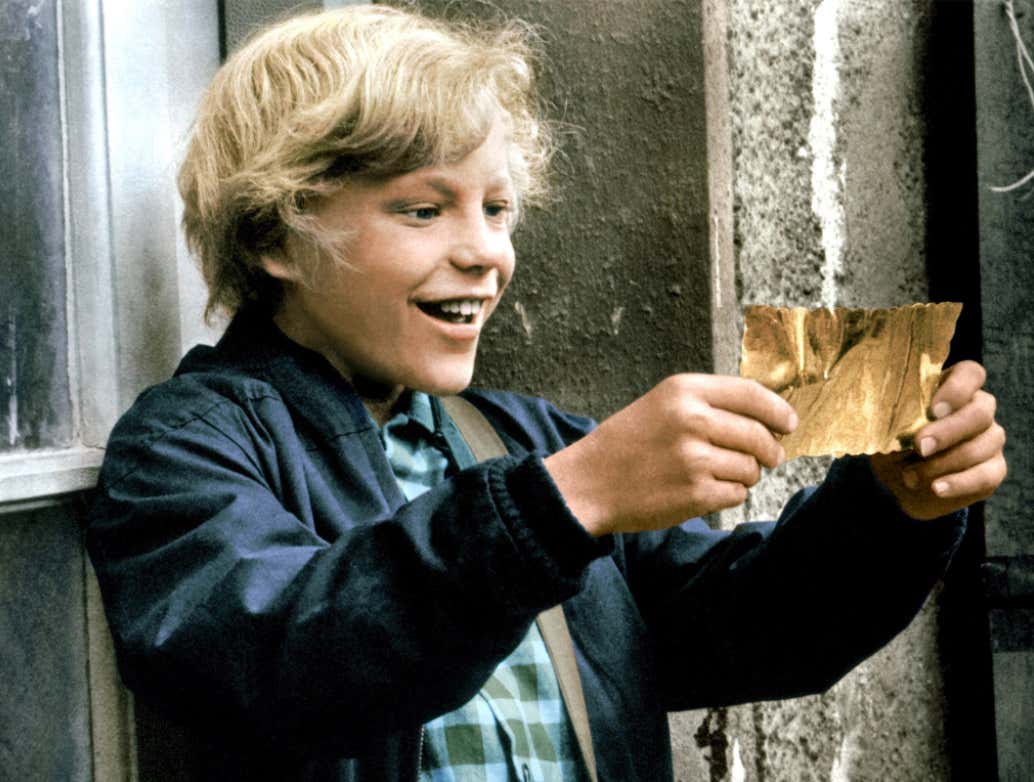
New York Times- The widow and the biographer of the beloved British children’s writer Roald Dahl told the BBC in an interview this week that Charlie Bucket, the young boy whose life is changed by a golden ticket in “Charlie and the Chocolate Factory,” was originally supposed to be black.
“His first Charlie that he wrote about was a little black boy,” the widow, Felicity Dahl, said in the interview. It was timed to the author’s birthday, which fans of his work celebrate as Roald Dahl Day. He would have been 101.
Mrs. Dahl made the remark during a conversation with Donald Sturrock, her husband’s biographer, on BBC Radio 4’s “Today” program. Mr. Sturrock said Mr. Dahl had understood “the American sensibility.” In response, Mrs. Dahl revealed the original idea for Charlie’s race and said she believed it had been “influenced by America.”
“It was his agent who thought it was a bad idea when the book was first published to have a black hero,” Mr. Sturrock said. “She said people would ask why.”
Mrs. Dahl said “it was a great pity” that her husband had changed Charlie’s race. When the interviewer asked if they would ever issue a “reworking” of the story, Mrs. Dahl replied, “It would be wonderful, wouldn’t it?”
So Roald Dahl, the universally beloved author of such as classics as The BFG, James and the Giant Peach, and Charlie and the Chocolate Factory, originally envisioned Charlie as a young black boy. His agent dissuaded him for reasons unknown. Was the agent a racist? Quite the opposite, in fact. Anyone who has seen that movie knows the film centers around a boy who stands to inherit a candy factory. Candy is filled with sugar, and sugar is a leading cause of diabetes. According to the postgraduate medical journal, African Americans have a high risk for type 2 diabetes:
African Americans have a high risk for type 2 diabetes. Genetic traits, the prevalence of obesity, and insulin resistance all contribute to the risk of diabetes in the African American community. African Americans have a high rate of diabetic complications, because of poor glycaemic control and racial disparities in health care in the USA. African Americans with diabetes may have an atypical presentation that simulates type 1 diabetes, but then their subsequent clinical course is typical of type 2 diabetes. Culturally sensitive strategies, structured disease management protocols, and the assistance of nurses, diabetic educators, and other health care professionals are effective in improving the outcome of diabetes in the African American community. (NCBI)
Had Dahl ignored the cautions of his agent, and stuck with his black rendering of Charlie, one can only imagine the torrent of lawsuits that would have resulted from such blatant racial subtext–that a black boy inheriting a candy factory was an allegory for the rising rate of diabetes within the African American community. The NAACP, the ACLU, and the Oprah Winfrey network would surely have condemned such wanton racial suggestiveness.
Luckily, Dahl went with the white protagonist instead, averting a literary disaster. We know Charlie Bucket as the unsuspecting, altruistic hero who inherits the chocolate factory, and nobody has ever made the connection between diabetes and the African American community that Roald Dahl so endeavored to connote. Let that be a lesson, folks: when writing a book, make all the characters white. That way, nobody can call you a racist.
PS- in addition to his racist agenda, Dahl also harbored anti-semitic leanings. But, like, for real…
Among the statements The Forward attributed to the author were, “There is a trait in the Jewish character that does provoke animosity,” and, “I am certainly anti-Israel, and I have become anti-Semitic.”
When Mr. Dahl died in 1990 at age 74, Abraham Foxman, who at the time was the national director of the Anti-Defamation League, wrote in a letter to The New York Times that Mr. Dahl “was a blatant and admitted anti-Semite.”
“Praise for Mr. Dahl as a writer must not obscure the fact that he was also a bigot,” Mr. Foxman wrote. He also cited many of the statements published by The Forward, 26 years before its article came out.
Also, this scene always scared the shit out of me. Strange that a man so anti-semitic would remove the one german kid on the tour first…